
Tribal Rebellion
- Home
- Tribal Rebellion
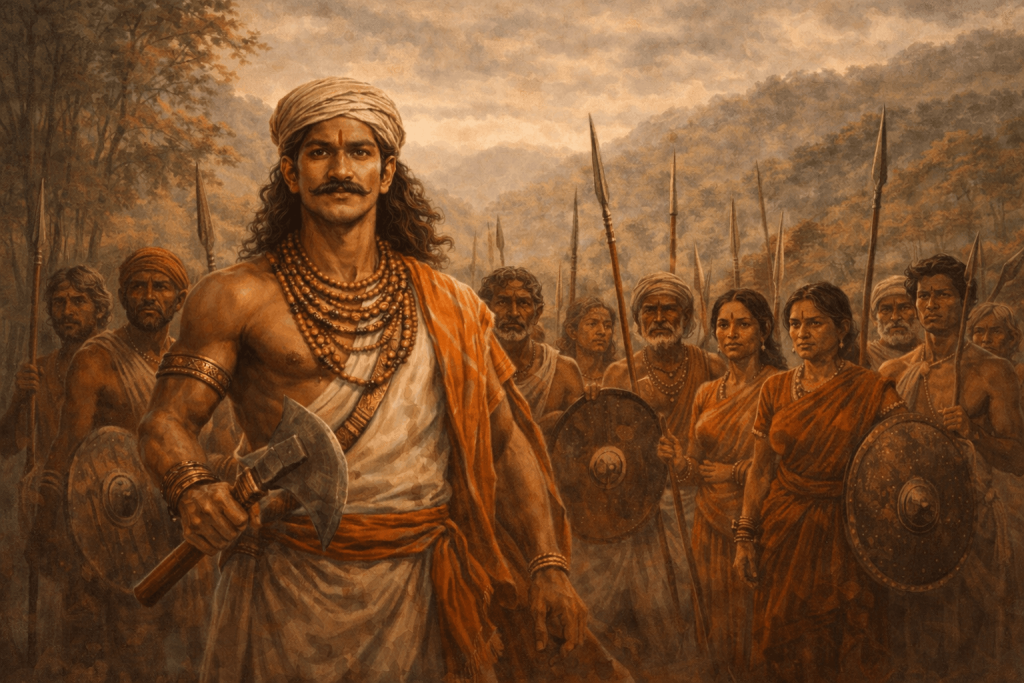
What Was the Movement?
“An indigenous uprising to defend land, culture, and self-governance.”
Madri Kalo led a determined tribal resistance movement during the period of British colonial rule in Odisha, at a time when indigenous communities were facing severe oppression and exploitation. British policies imposed heavy taxes, seized ancestral tribal lands, and disrupted traditional systems of self-governance, threatening the very survival of tribal life and culture.
In response to these injustices, Madri Kalo emerged as a powerful leader who united tribal communities to resist colonial interference. The movement was rooted in the protection of forest land, preservation of cultural identity, and defense of indigenous autonomy. It rejected forced taxation, external administrative control, and the erosion of tribal rights that had existed long before colonial rule.
“Defending tribal land, culture, and freedom from colonial control.”
Objectives of the Movement
🌿
Land & Forest Rights
Protecting ancestral tribal land and forest resources.
🛡️
Self-Governance
Resisting British administrative control over tribal regions.
🎨
Cultural Identity
Preserving tribal traditions, customs, and heritage.
🔓
reedom Exploitation
Ending colonial taxation, labor, and economic oppression.
“Leadership that united tribes and challenged colonial power.”
Role of Madri Kalo
Resistance Leader
Led tribal warriors in organized resistance against colonial forces.
Community Mobilizer
Brought villages and tribal groups together for a united struggle.

Strategic Guide
Planned resistance using deep local and forest knowledge.
Unifying Force
Strengthened unity, courage, and shared tribal identity.
“A movement that awakened courage, unity, and self-determination.”
Impact
Madri Kalo’s rebellion had a profound impact on British colonial authority in the tribal regions of Odisha. His leadership disrupted the administrative control imposed by the colonial government, making it increasingly difficult for British officials to enforce land seizures, taxation, and governance policies in indigenous areas. The resistance challenged the perception that tribal communities were passive or powerless, asserting their strength and determination to defend their way of life.
Beyond immediate resistance, Madri Kalo’s movement sparked a wave of awareness and courage among indigenous communities across Odisha. His actions inspired other tribal groups to question colonial dominance and assert their rights, leading to a broader spirit of resistance rooted in unity and self-respect. The movement reinforced the importance of collective action, showing that organized tribal resistance could effectively confront powerful colonial forces.
The long-term impact of Madri Kalo’s rebellion extended far beyond his lifetime. His sacrifice became a symbol of resilience and defiance, preserved in tribal folklore and cultural memory. Even today, his legacy continues to inspire movements focused on tribal rights, forest protection, and cultural preservation. Madri Kalo’s impact remains a vital chapter in India’s freedom struggle, reminding future generations of the crucial role played by indigenous leaders in shaping the nation’s fight for independence.